Clean Cut
Clean Cut
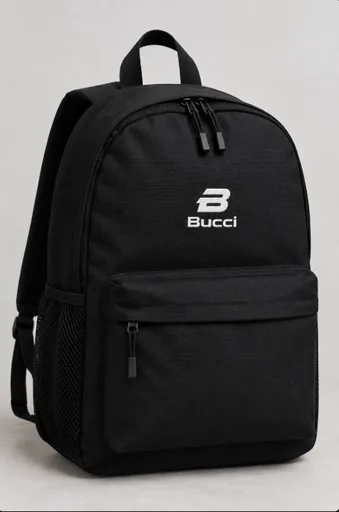
Text inputCreate a new 10-second vertical 9:16 video, one continuous shot, no cuts. Premium high-end advertising look, photorealistic, clean sharp digital image, high-key, true-to-life skin, hair and fabric detail. @image1 = portrait of the person. Use it as the only source of the person's identity: face shape and proportions, age, skin tone, eye color and shape, brows, nose, lips, ears, hairstyle, hairline, hair color, hair length, hair density and texture, and facial hair or the lack of it. The person must be unmistakably the same individual as in @image1 in every frame. Copy the hair exactly, with no added volume, no filled-in thin areas and no recoloring; if there is no facial hair in @image1, none appears. Do not inherit the clothing, background, lighting or pose from @image1. @image2 = the hero bag. Reproduce this exact bag: shape, proportions, silhouette, color, material and texture, hardware, stitching, seams, handles, straps or chain, and any logo, print or lettering exactly as they appear in @image2. Do not redraw, restyle, simplify, recolor, add branding or invent any detail that is not in @image2. Ignore the background, lighting and any hands or surface in @image2. The bag keeps a natural real-world size relative to the person. One realistic person from @image1, full body, wearing an oversized emerald-green wool coat with a visible soft wool texture and heavy natural folds, a white cotton tee, light straight jeans and clean white leather sneakers. They hold one fixed pose like a person in a photograph: weight on one leg, both hands in the coat pockets, body in a three-quarter turn, eyes on the lens, neutral calm confident expression, no smile. They never walk, never change pose, never blink, never gesture. At the start they stand in the left third of the frame, feet near the bottom, about one fifth of the frame height. Their face, hair, coat and body are never altered, erased or distorted at any moment. The bag from @image2 stands or rests on the stone floor directly beside the person's feet, slightly toward the center of the frame, in the natural resting position for its shape, with the front face shown in @image2 turned toward the camera, fully visible and not covered by anyone. It receives the same warm sunlight and soft contact shadow as the rest of the scene. Whenever it is seen in the void or in flight, it keeps its exact material, and as it turns a soft sun highlight glides across its surface, edges and hardware, consistent with light from the upper right, with a believable physical weight and with any handles, straps or chain swinging by inertia. Camera: completely locked-off, as if on a tripod, for the whole video. No pan, no tilt, no zoom, no handheld shake, no focus pull. Wide full-body shot at eye level, the environment fills the rest of the frame. Deep depth of field, everything sharp, except that the bag may soften briefly when it passes very close to the lens. All the motion in the flight comes from the bag itself, never from the camera. The only thing that ever comes close to the lens is the bag in the last seconds of its flight. Environment, intact state: a sunlit Mediterranean boutique-hotel patio, rich in tactile detail. Warm terracotta-plaster walls with hand-troweled texture, hairline cracks and soft sun-faded patches, tall arched windows with deep reveals and wooden louvered shutters with slightly weathered paint. A striped cream-and-lemon canvas awning with visible stitched seams and a soft scalloped edge runs along the top of the frame. At the left edge, a massive round plastered column runs the full height of the frame as a foreground element, with subtle trowel marks. In the center-left, a tall lemon tree in a big terracotta pot, glossy leaves and a few ripe lemons, a thin layer of pale gravel on the soil. Several rattan pendant lamps with visible hand-woven patterns hang on dark thin cords at different heights. Wooden café tables with natural grain and lemon-yellow chairs, terracotta jars of different sizes with matte glaze and small chips, a few cream linen-upholstered armchairs on the right. The floor is warm light-gray stone with fine joints and gentle wear. Warm late-afternoon sun from the upper right, soft clean shadows, gentle highlights on the stone and on the lemon leaves. The scene is calm at the start, only the lemon tree leaves move slightly in the breeze. The progressive erase effect, which applies to every erase phase below. The architecture and sky are deleted from the video piece by piece, like separate layers removed one at a time by an AI cutout or background-remover tool: each piece is an actual element or surface of the background, deleted along its own natural silhouette, and its pixels become pure clean white. The pixels of every kept object are never touched. Kept objects are the person, the bag, the lemon tree and its pot, the tables, chairs, jars, armchairs, the pendant lamps with their cords, and the stone floor. There is no single traveling edge, no sweeping line and no front moving in one direction. The pieces vanish in an irregular, non-sequential order across the frame (for example center, then right, then upper left, then lower right), each in a single instant of one to two frames, with a hard pixel-sharp contour and a short hold before the next piece, so the background is erased gradually in visible steps, with the pace slowly accelerating. Where a deleted piece touches a kept object, the object stays fully intact and exactly in place, and the white appears only around and behind it, hugging its exact silhouette (their hair, coat and shoes, the bag and its handles or straps, chair legs, leaf tips, lamp cords) with no halo and no leftover pixels. Nothing white ever sweeps over, in front of, or through a kept object. There is no white curtain, sheet, wipe, fade, dissolve, glow, feathering or gradient: a piece is either fully there or fully white. The deleted pieces do not move, break, crumble, peel, fold or fall, and produce no particles, fragments, dust or sparkles. 0.0-0.4 s: The scene is whole. The bag stands beside the person's feet, clearly recognizable from the very first frame. The person stands in their pose in the left third. 0.4-1.1 s: First deletions. The sky and the awning canvas disappear in separate pieces in irregular order, the center stripes first, then the right, then the left, then the last scalloped edge. Lamp cords, the tree crown and the plastered column stay untouched. 1.1-1.9 s: The upper wall plaster is deleted in four or five separate patches in scattered order, each following its natural boundaries around the windows and architectural edges. The tops of the arched windows vanish individually, one by one, leaving each window's frame or shutter for a moment as its own piece before it goes. 1.9-2.8 s: The wooden shutters and the remaining windows disappear one by one, then the wall panels between them, in a non-sequential rhythm, with the pauses between steps getting shorter. Areas of pure white open up between the remaining wall pieces and grow outward from several separate places. 2.8-3.7 s: The lower walls, wall bases and remaining wall pieces vanish in quicker steps, cutting precisely around the person's silhouette, the bag, the tree, the furniture and the lamps, which stay intact in front of the growing white. 3.7-4.5 s: The foreground column is deleted last, in three or four separate vertical pieces in irregular order, and the final bits of background vanish. By 4.5 s only the stone floor, the person, the bag, the lemon tree in its pot, the tables, chairs, jars, armchairs and the pendant lamps remain on a pure seamless white void. The floor stays visible with soft contact shadows. 4.5-5.7 s: Everything detaches. The tables and chairs lift off the floor, tumble and spin slowly, and scatter outward in weightless slow motion, their wood grain and glossy highlights catching the sun. The pendant lamps lift with their cords and swing. The person lifts off the floor together with the objects and rises smoothly, feet leaving the ground, their pose, gaze, expression and hands in the pockets unchanged, face staying toward the lens; their hair and coat hem lift only slightly as if in zero gravity. Their contact shadow on the floor shrinks and softens as they rise. The bag lifts off the floor, rising gently with its handles, straps or chain hanging loose in weightlessness, its front face still turned toward the camera. The lemon tree stays rooted in its pot. 5.7-6.6 s: Weightless suspension. The person, the furniture, the lamps and the jars float, slowly rotate and slowly drift apart, all clean and intact with no debris. The person hovers in the left part of the frame, rotating no more than about 20 degrees around their vertical axis, still in their frozen pose with their face toward the lens. The bag rises to the center of the frame and starts a slow turn around its vertical axis, as if showing itself off, still facing the camera at the start of the turn. 6.6-8.3 s: The bag's flight, a graceful curved path, never a straight line at the lens. From 6.6 to 7.3 s it drifts up and to the right while turning slowly through about 120 degrees, revealing its side and back, with a soft sun highlight gliding over its material and hardware, handles, straps or chain swinging by inertia and then settling. From 7.3 to 7.9 s it banks and sweeps in a wide S-shaped arc from the right side of the frame across to the left, accelerating, rotating back toward the front, and growing steadily as it approaches the lens, with gentle natural motion blur on its edges. From 7.9 to 8.3 s it rushes right up to the lens in a final curve, its handles, straps or chain drawing in tight against the body, its front face turning to face the camera squarely and snapping into sharp focus, and growing until its edges pass beyond the frame. 8.3-8.8 s: Total frame cover. The bag is so close to the lens that its opaque front face extends beyond all four edges of the frame, including its corners. The handles, straps or chain are tucked against the body or lie fully outside the frame, so there is no gap, no see-through opening, no sliver of white void or background visible anywhere at the edges or corners. The front face is sharp, with the material texture, stitching, hardware and any logo or print of @image2 clearly visible. The frame is one hundred percent covered by the bag for a full 0.5 s. At the middle of this window, around 8.55 s, completely hidden behind the opaque face, everything snaps back: the patio, the furniture, the lamps, the tree and the person return to their original places exactly as in the first frame, and the bag that rests beside the person's feet is already there as in the first frame. Nothing of the restored scene is visible until the bag starts to leave. 8.8-9.4 s: The flying bag, front face toward the camera, handles, straps or chain still pressed against the body, slides downward in a smooth curve and exits the frame through the bottom edge, passing in front of and below the camera, with strong natural motion blur. As its lower edge moves down, the restored sunlit patio is revealed behind it from the top of the frame downward, and the bottom of the frame clears last. The flying bag is completely out of the frame before the bag on the floor becomes visible, so only one bag is ever seen at a time. The flying bag never returns. 9.4-10.0 s: Final stable state. The intact sunlit patio exactly as in the first frame: awning, walls, windows, shutters, the foreground column, tree, tables, chairs, jars, armchairs and lamps in their original places. The person stands on the floor in the left third in their original frozen pose, untouched. The bag rests on the stone floor beside their feet with its front face to the camera and its soft contact shadow, perfectly still. Only the lemon tree leaves move slightly in the breeze. Light and color: warm late-afternoon sun from the upper right, soft long shadows, warm terracotta and lemon tones with the emerald coat as the strongest color accent. In the void phase the white is pure clean high-key white, soft and shadowless, with soft contact shadows only on the floor and under the person's feet while they are on it. Commercial retouched finish, rich but natural color, no film grain, no heavy bloom. Sound: soft courtyard ambience (birds, distant cafe murmur) at the start. During the erase, a quiet clean digital tick accompanies each deleted piece, the ticks getting denser as the pace accelerates, no sparkles, no glitter. A deep low rumble swell builds from 3.5 s and peaks at about 4.5 s as the last big structures vanish. A weightless airy texture with soft wooden knocks as the furniture and the person float. A smooth rising whoosh that follows the bag's curved flight and peaks as it fills the lens, a deep thud at the instant of the snap-back during the total cover, a quick Doppler-style swoosh as the bag drops out through the bottom, then the sound drops quickly and the warm courtyard ambience returns and holds through the final still frame. No footsteps, no music, no speech, no on-screen text, no subtitles. Constraints: exactly one person, identical to @image1 in every frame, with no face drift, no age change and no added hair or facial hair. They keep their frozen pose while floating, and their face, body and outfit are never morphed, erased or distorted. Exactly one bag visible at any moment, identical to @image2, never duplicated, never carried or worn by the person; the flying bag leaves the frame completely through the bottom and never comes back, and the bag resting at the end is not delivered by the flight but is simply already in place in the restored frame. During the total cover the bag fills the frame completely: no gaps, no white background visible around handles, straps, chain or corners, no partial transparency, and the snap-back is never visible. The camera never moves. The bag's flight is a smooth curved arc with natural turning, never a flat straight zoom or push-in. The erase is a progressive, piece-by-piece, hard-edged, mask-based deletion that follows the silhouettes of background elements, never a single sweeping line, never a white curtain, fade, blur, dissolve or wipe, and never covering kept objects. No particles, debris or crumbling. The void is pure white, not gray, not gradient. No glitch, no flicker. The bag always looks like a real physical object, never a flat digital graphic, and it never changes shape. The details of the bag, including any logo or text that exists on it in @image2, are never redrawn, distorted or invented, and no other logos or text appear anywhere. The bag is the only object that comes close to the lens.